Does Your Travel Backpack Actually Survive the Rain? A Water-Resistance Guide
Every travel backpack on every shelf claims to be "water-resistant." Almost none of them explain what that actually means. Somewhere between a light drizzle and a genuine downpour, most bags quietly stop protecting what's inside — and most travelers only find out the hard way, halfway through a trip, with a soaked laptop sleeve.
If you're shopping for a water resistant travel backpack, this guide breaks down what the label actually promises, what it doesn't, and how to tell the difference before you buy.
Water-Resistant Is Not Waterproof — And the Gap Matters
These two words get used almost interchangeably in product listings, but they describe genuinely different levels of protection.
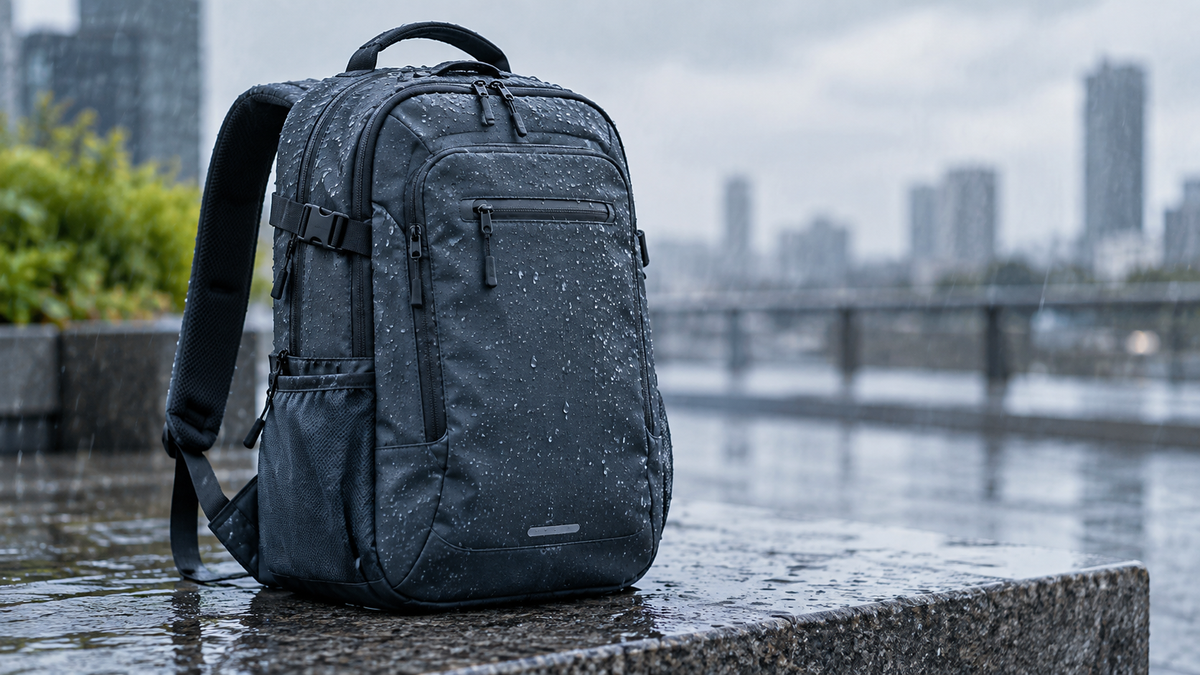
Water-resistant fabric slows water down. It repels light rain, splashes, and humidity for a limited time, but sustained exposure — a real downpour, or being set down in a puddle — will eventually let moisture through.
Waterproof fabric blocks water almost entirely, usually through a sealed coating or laminate, and typically comes with taped seams and waterproof zippers to match.
Most travel backpacks, including premium ones, are water-resistant, not waterproof. That's not a flaw — full waterproofing usually adds weight, cost, and reduces breathability. The real issue is when a bag is marketed with waterproof-level confidence while only offering light resistance.
What Actually Determines Water Resistance
1. Fabric Denier and Coating
Denier measures fabric thickness — higher numbers generally mean tighter weaves that resist water penetration better. Look for 600D polyester or higher, ideally paired with a PU (polyurethane) or DWR (durable water repellent) coating, which is what actually repels water rather than just the base fabric.
2. Zipper Quality
Standard zippers are one of the most common entry points for water, since the teeth themselves aren't sealed. Water-resistant zippers use a coated tape and tighter tooth spacing to reduce water seepage — worth checking for on the main compartment specifically, since side pockets matter less.
3. Seam Construction
Stitched seams create small needle holes that water can work through over time. Bags built for genuine weather resistance either minimize stitching on top panels or seal seams with tape, similar to how outdoor rain gear is constructed.
4. Base Panel Reinforcement
Bags get set down on wet ground more than any other surface touches water. A reinforced, slightly raised base panel keeps the main compartment further from standing water than a flat-bottomed design.
How to Actually Test a Backpack's Water Resistance
Before trusting a listing's claims, a few practical checks help: look for a specific fabric rating (600D, 900D, 1000D) rather than just the word "durable"; check whether the product mentions a DWR or PU coating specifically, not just "water-resistant fabric"; read reviews for real-world rain or monsoon mentions, not just general quality comments; and if buying in-store, run a few drops of water across the main panel and watch whether it beads up or soaks in within seconds.
Why This Matters More During Indian Monsoons
For travelers moving through Indian cities during monsoon months, water resistance isn't a nice-to-have feature — it's the difference between arriving with a working laptop and dealing with a damaged one. If you're also trying to find one bag that handles both your work commute and the occasional weekend trip, our guide to choosing a backpack for both office days and short getaways covers that balance in more depth.
This is also where a rain cover — a separate, packable shell that fits over the entire bag — becomes worth carrying even with a water-resistant backpack. It's a low-cost backup for exactly the situations where fabric-level resistance alone isn't enough.
What to Prioritize Based on How You Travel
If most of your travel involves short exposure — walking between a cab and a building, brief waits at transit stops — a well-coated 600D water-resistant backpack is generally sufficient. If your travel involves longer outdoor exposure, unpredictable weather, or carrying expensive electronics you can't risk, prioritizing a higher denier fabric, sealed zippers, and packing a separate rain cover is the safer combination.
Common Mistakes to Avoid
Buying based on the word "water-resistant" alone, without checking denier rating or coating type, is the most common misstep — the label alone tells you very little. Assuming a water-resistant bag can handle sustained rain the way a waterproof one can is another frequent and costly assumption. And skipping a rain cover because the bag is "already water-resistant" removes a cheap safety margin for very little reason.
Frequently Asked Questions
What's the difference between water-resistant and waterproof backpacks?
Water-resistant backpacks repel light rain and splashes for a limited time, while waterproof backpacks use sealed coatings and taped seams to block water almost entirely, even during sustained exposure.
What denier rating is good for a water-resistant travel backpack?
600D polyester or higher is generally considered a solid baseline, with 900D to 1000D offering stronger resistance for frequent or heavy-duty travel use.
Do I still need a rain cover if my backpack is water-resistant?
Yes, especially during monsoon season or extended outdoor exposure — a rain cover adds a low-cost layer of protection that fabric-level water resistance alone doesn't fully provide.
Can water-resistant backpacks protect a laptop during heavy rain?
Not reliably during sustained heavy rain — for genuine downpour conditions, pairing a water-resistant backpack with a rain cover or a padded, water-resistant laptop sleeve offers much better protection.
Not sure if your current bag would actually hold up in a downpour? Checking the fabric denier and zipper quality takes two minutes and tells you more than any "water-resistant" label ever will.